Showing posts with label Brooklyn College. Show all posts

Saturday, May 29, 2021

Entry - 5.29.21


Unless you are a CPA or a savant, I wouldn't expect you to know that this is my fiftieth blog entry... but it is. I started writing my blog, From the Studio, eight years ago. I suspect that if it were printed in book form it would fill over 500 pages... if illustrations were included, multiply that by five. So if I've accomplished nothing else here, I can at least take pride in the fact that I've demonstrated a talent for unrestrained verbosity. I recall an occasion several years ago when a friend at work made his first visit to my site while at the office with me looking on over his shoulder. Without reading a single sentence, he scrolled through screen after screen of densely packed wording, then let out a groan of disgust. “Good god, I would never subject myself to this!” I couldn't help but laugh heartily in sympathetic agreement. Years earlier when I had first begun communicating on the internet via social media and art sharing sites, my oldest son tried to gently clue me in. “Dad, you write too much. Nobody will read your entries.” I knew he was right. We live in an age of cursory examination and instant gratification. The kind of investment required to slog through one of my entries is a thing of the past. Though all of these observations are true, this stubborn, old egomaniac also recognized that, if I were going to embark on this enterprise, I had to do it my way. A few embarrassing confessions might help to somewhat explain my aberrant behavior: 1) I actually read the instructions before plugging in or constructing new merchandise, 2) I flip out when news anchors use poor grammar, 3) I double space between sentences, 4) I actually enjoy watching foreign movies and TV shows with subtitles, and 5) I've read both War and Peace and Anna Karenina twice and hope to relish that pleasure a couple more times before my exit from this world. So obviously I'm a relic of the distant past and cannot be held responsible for my excesses. Let me offer here the first of what may end up being several apologies.


I displayed the image above on my first blog entry. It's simply the stump of one of a number of healthy trees I was saddened to discover our local park had chosen to remove (for reasons I'm still unable to fathom) that spring. When I noticed the trees were gone, I approached their former location and was surprised to observe that the stumps, cut nearly level with the ground, were really quite handsome. The photograph I took of one of the stumps became for me a metaphor for a kind of beauty found in unexpected places. I thought it was the perfect emblem for a site that proposed to provide a space to present and evaluate the artwork of little known artists (including myself), and it was displayed in the upper right corner of my blog for many years (until I recently replaced it with my own image and added a profile identifying myself and explaining my intentions).

For this 50th entry, I thought it would be fun to return to the park and document that same stump's condition eight years later. Unfortunately, I found that during subsequent activity in the area the stump had been ground down and completely eradicated, a stretch of green lawn occupying that same spot today. However while meandering in the general area, I was able to find the remnants of a number of trees that were also sacrificed during that spring purge many years ago and I took several photographs which I will share below. The warm siennas of the wood have turned to cool umbers, but even the decayed vestiges of those trees retain a certain abstract beauty. So I guess images (and words) worthy of consideration may still be found in unexpected places.


As I have probably stated too many times, the goal of my blog, initially, was to introduce to a mostly lay audience artists and artwork that do not receive a lot of attention, provide analysis and observations about specific work and general trends in art history and afford myself the opportunity to display my own work – both current and from the past. My sincere desire was to use readily understandable language, to engage in substantive deliberation that would be significant to most readers, whatever their background, and to avoid becoming pretentious, technical or ethereal in my writing. My early entries were a bit academic, though I made an effort to introduce a personal component in most of my narratives. I can't assert that I ever introduced a completely original observation in any of my posts, but I can guarantee that the concepts are my own, the organization of my articles springs from my own idiosyncratic way of thinking and whatever material I present is done so with conviction. I recognize that I studied art history for so long, have read an infinite number of books and magazines about art and have both read and watched many interviews provided by artists themselves that it is impossible for long established concepts not to infiltrate my perceptions. Perhaps the exercise of writing this blog encourages me to organize and prioritize the various streams of thought in my head and filter out voices that I find invalid or biased. I don't aim to shock or provoke in my writing, though on occasion an entry may spark a spirited debate with a reader. That, truly, is a rare occurrence. I must confess that it is far more likely that my words will bore my audience than offend it. At times, I'll read one of my old posts and find it a trial to get through. I genuinely hope that my reaction results from being overly familiar with the material, both my phrasing and the ideas presented, but I have my doubts. So again I humbly beg your pardon.

On the other hand, there are some entries with which I am actually quite satisfied. Occasionally, my thoughts coalesce, the words flow effortlessly, my associations and observations are spot-on and I find just the right tone to effectively enhance my delivery. When that happens, the experience is absolutely magical.


Without any conscious intention, the thrust of my entries has evolved over the years. I am much more likely now to introduce personal tidbits or family history into my writings than I was earlier on. I do this because I find addressing such topics to be appealing to me and suspect that my readers may deem the material more entertaining. I definitely discover as I grow older that my interest in recording and interpreting my own past intensifies. My thinking in making such material public is that all people share some essential commonality and will take an interest in the experiences of another individual if the material is presented in an authentic and aesthetically pleasing manner. But if delving into the particulars of one unremarkable fellow world citizen isn't appetizing to you, I offer my sincere regrets.

I'm not sure, but I believe there is something about myself that I haven't touched upon in any of my previous blog entries. It is nothing momentous, salacious, disturbing or embarrassing, so don't get your hopes up. It's simply that at one time I thought of myself as a writer. In fact, when I started my undergraduate studies, my primary goal was to attain the knowledge and expertise that would assist me in becoming a successful writer of fiction. Even while still attending grade school, I had devoted years to hunkering down in isolation and generating reams and reams of prose (written in script with a BIC pen on loose-leaf paper), much of which, mercifully, was never shared with another soul. Throughout my pre-college schooling, many of my instructors recognized that I had a certain ability and encouraged me to pursue this interest of mine, and it was only natural that, when beginning my university studies, my focus was on earning an English degree.

Art was something I had only explored independently... at least until my senior year in high school when I decided that I deserved a break from the rigors of my usually packed schedule of academic studies. I took two actions: I arranged my schedule to allow me to exit school at lunchtime, and I registered for an art class. Though my fellow students were mostly a motley collection of dope fiends and flunkies hoping to score a few easy credits, the art class was incredible, providing a solid foundation of color theory and the application of perspective that exceeded by far my expectations. I was surprised to learn when summoned to meet with my guidance counselor that Mr. Riley, the kind and capable teacher of the class, had met with him to discuss my talent and suggest that I should consider studying art in college. Over four decades later, I can't say for certain what was the determining factor in my decision to tackle a double major at SUNY Stony Brook, but Mr. Riley's generous deed was definitely a contributing influence.


At college, the patterns familiar to me in my previous schooling were reversed. My art courses were demanding, provided hands-on instruction and required students to create a body of work that exhibited a consistent, personal perspective. The objective of my studio courses was to make the students actually produce art. Conversely, the thrust of my English classes was to have the students read good literature, learn to analyze it and then generate well-crafted essays that communicated successfully the results of that analysis. Not a single credit for any creative writing course offered by the university was applicable toward fulfilling the requirements of my English major. (Huh?) Having two distinct majors with no overlapping requirements meant that I always had a hectic schedule, often maxing out on the number of credits a matriculated student could earn in a single semester. Even then, I had to take summer courses and stay for an extra semester at school. Under the circumstances, there was absolutely no possibility of my squeezing in a creative writing course that would not contribute toward attaining my degree. So, while I spent my four and a half years of university study producing art and undergoing regular critiques of my artwork, the opportunity to write fiction, hone my creative writing skills and receive evaluation from my professors was denied me. Inevitably, at the time of my graduation, I emerged as a fine artist and went on to earn an MFA in drawing and painting from Brooklyn College.

I do not regret getting that English degree. The ability to write in clear, flowing, grammatically correct language is an extremely rare skill these days. Throughout my tenure with state government, I discovered that I could write business letters and emails and generate regulatory instruction that effectively conveyed real meaning. It was almost akin to having a superpower. During my last decade of employment, I was responsible for publishing all of my unit's instructions, directives and other information on our agency's website. Supposedly, my sole obligation was to take the material I was given by my coworkers and insert it on the correct page, while establishing links with other appropriate documents or pages on our site. The quality of the material shared with me was often so poor that I couldn't in good conscience make it public, so I felt obliged to edit and rewrite many submissions before posting them on our site. Doing this was time consuming and really not my responsibility, but I believed that our agency's reputation would be damaged if we published shoddy, unintelligible posts. (On the other hand, some of my coworkers might say that I was too meticulous and lethargic to function productively in our modern, fast-paced world, and I must concede they could have a valid point.) Anyway, I truly believe that, even in this twenty-first century, there is a critical need for individuals who can write coherent, concise and painless prose, and I encourage all the budding English majors out there to pursue their dream.

You might be wondering what happened to the creative writing. Well, throughout my years of employment, I continued to write fiction, periodically producing short pieces that are sometimes shared with a small group of friends... but more often simply stuffed into a leather-bound notebook for safekeeping. Every now and then, I'll browse through this material and read through an entire story. Most of my stories are terribly flawed, ill-conceived and poorly crafted, but, occasionally, I'll read through one with which I'm pretty satisfied. Undaunted by the inconsistent results of my efforts, I continue to produce short fiction even during my post-retirement days – though I must admit that finding the discipline to sit still for hours and construct strings of coherent sentences is more challenging now that I'm no longer imprisoned in a train car for fifteen hours of commutation each week. Despite my diminished output, the idea recently occurred to me (and, incidentally, this is what all of the previous blather is leading up to) that my blog would be a suitable vehicle on which to introduce every so often a bit of my short fiction. (In fact, I've already been working for weeks on a story that, if brought successfully to a gratifying conclusion, could very likely end up being my next blog entry.) Therefore consider yourself forewarned. And, of course, I apologize in advance for any discomfort my inept forays into authorship might cause my readers.


Looking toward the future, I intend to continue writing about art but also hope to further broaden the scope of my entries. My belief is, if I explore a wide variety of topics that excite and interest me personally, the resulting entries cannot help but become more imaginative, entertaining and polished.

I want to thank the individuals who have consistently read my blog over the past eight years - especially those who have offered encouragement, comment and criticism in the past. And, needless to say, I welcome any new readers who may stumble across my “message in a bottle” while cruising the expansive waters of today's internet.

As always, I encourage readers to comment here. If you would prefer to comment privately, you can email me at gerardwickham@gmail.com.


Saturday, September 19, 2020

Entry - 9.19.20

My FG-20
I didn't own a camera until I was in my late twenties. Before then, I had no need for one. I guess my attitude was: I'm living life; there's no reason to document it. Of course, my parents took photographs of my siblings and me when we were small children and recorded significant family events for many years, but I would call these pictures “snapshots” - in that they were immediate, lit and framed haphazardly and usually afforded little or no artistic merit. If you wanted a quality portrait, you went to a professional studio where the individual(s) to be captured on film, attired formally and consummately coiffed, would be posed awkwardly before a backdrop of ethereal clouds and recorded wearing a freakish grin. Early on, these photos were in black and white format, but by the mid-60's color photography had become the norm. I should also add that my father had purchased an 8mm movie camera including a bar of extremely bright lights which he pulled out and assembled at every family gathering. On a closet shelf in my parents' bedroom was a shoe box stuffed with reels of film containing images of relatives, lit a ghostly white before an abyss of black, grimacing uncomfortably as they raised their hands to shield their eyes from the blinding glare. By the time we children were in our teens, the enthusiasm for documenting our development had waned. We weren't cute anymore. We dressed a bit slovenly, wore our hair too long and were loathe to smile for the camera. Later on, for his work as an insurance adjuster, my father was equipped with a Polaroid camera with which he recorded evidence of fires, floods and other disasters to be inserted in his loss files, large manila envelopes whose exteriors were lined with a multitude of handwritten notes in a rainbow of different colored inks. Every now and then, he would point the camera our way and snap off a photo of us, sometimes caught unawares in our daily activities, more often posed conventionally in a static row to document some momentous family occasion. However this didn't happen often. It may sound strange in our current era in which we record on our cellphones, instantaneously and nonstop, every insignificant moment of our humdrum lives ( Look! I'm riding on a train. Look! I'm eating a plate of pasta. Look! I'm clipping my toenails.), but I'm in possession of only a handful of pictures of myself from my high school days, even fewer from my undergraduate years and virtually none from the period of my graduate studies when I was no longer living at home. There is a great void between about 1981 and 1987 during which whatever was happening at that time occurred off-camera.

A change occurred when I had to make transparent slides of my paintings for submission to galleries. It was the only format they'd consider. I had gone through this process twice before: when applying to grad school and immediately after graduation. But I never used my own equipment. A couple of years out of grad school, I had built up a sizable body of new work that would have to be a part of any gallery submission, and I thought it was high time I purchased my own equipment and learned to make high quality reproductions of my paintings without any assistance. Photography didn't excite me much. It seemed very technical – something that had turned me off to printing a decade earlier. But I really didn't have any other viable option. As I usually do in similar circumstances, I carried out a lot of research before making a purchase. I settled on a Nikon FG-20, a good quality camera that came with a pretty decent standard lens. What excited me most about this camera was that it was low tech and permitted me to select all of my settings manually – something critical for a control freak like me. In addition, I bought a tripod, lighting stands and hoods and special bulbs to be used in making Tungsten Ektachrome slides. This represented quite an investment for someone barely eking out a living at that time.

From the moment I purchased this camera, I began experimenting with what it could do. Any normal person, recognizing his or her incompetence, would begin by shooting under optimal circumstances – static subjects lit well enough to permit an aperture small enough to facilitate a deep depth of field and an exposure speed fast enough to avoid blurring. One of my many character flaws is that I am unable to start small and incrementally attain the skills required to tackle more challenging and complicated projects; I guess I'm impatient and want to immediately make “great” things happen. In my teens, I thought I'd give sculpture a try – my first project was to make a copy of the Venus de Milo. During a college critique session in Toby Buonagurio's drawing class, she singled out one of my drawings for particular praise and then said to me, “Something about this assignment upset you. I could see that during our last class.” I was surprised because I didn't think I was that transparent. I had been irritated owing to her requirement that we students should make a number of preparatory sketches of our subject before tackling a more finished drawing – a perfectly reasonable and sensible request which however contradicted my normal spontaneous process. (When required to submit preparatory sketches, I would often complete the finished work then fake the exploratory sketches afterwards.) I was a little embarrassed, but I glanced up at Toby and mumbled caveman-like, “I don't like doing preparatory sketches. I just want to do the drawing.” She smiled and said, “Fine. You don't have to do any more preparatory sketches.” Kudos to you, Toby, for tolerating a stubborn and impetuous student. Perhaps I've matured a bit since then (but I sincerely doubt it).

So after purchasing the Nikon FG-20, I immediately wanted to test the limits of what this device could do – kind of like getting a Maserati up to 150 mph during a test drive. At that time, I was living in a bizarre neighborhood located at the farthest fringes of Brooklyn. I used to call it “the land that time forgot” because the streets and storefronts reminded me of a set from a 1950's black and white film noir about inner-city despair. To be merciful, I'll just call the local population “colorful”. I began going out after dark with my camera and tripod to take time-lapse photos of local storefronts, street scenes and cemeteries. I shot portraits by candlelight. I experimented with multiple exposures. I staged surreal situations in which my subjects wore exotic costumes and make-up and were posed before ornate backdrops performing theatrical stunts. As you would expect, the vast majority of these photos were utter failures. But that wasn't important. What mattered was that I had caught the bug. I loved my camera, and my interest in photography grew with each passing year.

Since those initial forays, I have settled down a bit, became somewhat more technically proficient and learned to take a successful picture. I have documented my salad days living in New York City with my girlfriend (now wife), our relocation to a northern suburb, my children's development from babyhood to adulthood, a multitude of vacations, holiday gatherings, local landscapes, posed portraits and family pets. Quite a few years ago and somewhat reluctantly, I transitioned to a quality digital camera after spending several days attempting to find a photography store in NYC that still sold Ektachrome film. Now, almost all of my paintings begin with a carefully lit and choreographed photo-shoot during which I take dozens of wide-angle and closeup shots in a variety of exposures which I then print myself to use as my primary resource in the construction of my compositions. I have painstakingly put together an archive of nearly every painting, drawing and print that I have in my possession – an arduous photographic enterprise that took years to complete. On occasion, I still perform technical experiments with my camera, hopefully achieving better results than those of my fledgling trials. At this point, I would call myself, cautiously, an “amateur photographer”.

As I write these words, I recognize that this blog entry has meandered a little further afield than I usually allow. Anyone who's read just a few of my entries is probably painfully aware of my inclination to take wide detours or slip down irrelevant cul-de-sacs in their fabrication. In writing these entries, I always have a pretty good idea of my final destination and some stops I want to make along the way getting there, but I definitely permit myself a generous amount of latitude in how I fill in the gaps between the station stops on my “journeys”. I guess that's one of the benefits of writing solely as a means of self-expression with no editor looking over my shoulder to keep me on the right path: you gain the freedom to be a bit erratically self-indulgent from time to time. I believe that somewhere buried amidst all the prior verbiage is one critical assertion: that I recognize that there exists a fairly sizable gap in my early history during which I possess barely a single picture documenting myself, my environs and the activities I was pursuing at that time. I'm not sure how I feel about that. Certainly, back then, I couldn't have cared less. But with the passage of years I've definitely become more nostalgic about my past. And who would deny that the twenties are a pretty important period in an individual's lifetime – when full physical maturation is achieved and, so I am told, creative invention reaches its zenith? I was surely energized back then. For the first time in my life, I was living on my own and working to support myself. I was attending grad school and generating artwork at a pace that is absolutely unfathomable to me today. I was dating and socializing and exploring Manhattan and Brooklyn whenever I got the chance. They were certainly formative years for me, and I do regret not making a minimal effort to record their passage.

At least that is what I understood to be my situation until a couple of weeks ago. At that time, I began receiving periodic transmittals of digital files from an old friend from Greece. These transmittals arrived at irregular intervals and with little fanfare. I'd sign on to my computer to see what was happening in the big world, and I'd find more files waiting for me. “Holy cow!,” I'd think to myself every time this occurred, “he actually has more files to share.” Each transmittal represented a revelation for me, a renaissance of memories long gone dormant never expected to be revisited again. Not to be too rhapsodic, but the experience was really rather magical.

I think an explanation is required.

While completing my graduate studies at Brooklyn College in the mid-80's, I established a close friendship with Yiorgos (Georgios) Katsagelos, a Greek national studying photography in the college's art department. We formed a sort of symbiotic relationship, providing perspective and commentary on each other's artwork. Surely, during those years, we engaged in thoughtful critiques of our individual creations and discussions of art in general, some of the most constructive of my career. I was drawn to Yiorgos because he opened up another world to me. Not only was he a product of another culture, but he was dead serious about his art and seemed to me devoid of the debilitating egotism that infected so many of my American compatriots. I was able to provide him with some minimal direction about art technique that may have proved helpful as he fulfilled the college's requirement that he take a few standard studio classes while pursuing his concentration in photography. He helped me transport my paintings to my reviews at the college, and, at the conclusion of our studies, he made high quality transparencies of my work for me. But, most importantly, we shared a friendship. Because he had a car, Yiorgos often frequented my apartment in Brooklyn which was located in the vicinity of the college. I visited his place in Queens and stopped by the diner at which he worked in Manhattan. We socialized together. I painted his girlfriend's portrait. He demonstrated to me the entire procedure of developing and printing black and white photographs, walking me through each step in the process, which involved the use of multiple chemical baths and sophisticated enlargers. He visited my parents' home on Long Island.


Throughout this period, Yiorgos was always taking pictures. In fact, I can't recall ever seeing him without a camera. When I take a picture, there is a lengthy set-up process during which I adjust my exposure, speed and light settings, frame the photo and focus the camera. If making a portrait, my subject is painfully aware of my activities and waiting awkwardly and impatiently for me to snap the shot. Not so with Yiorgos. Often I had no idea that he had rapidly extracted his camera from his bag and would glance over to find him already recording my image. Maybe it was because this happened so regularly and so quickly that I retained so little recollection that these images existed. But the images do exist, and I provide below a small sample of them. (Yiorgos assures me that there are others, but he is moving through his oeuvre chronologically and will share additional photos with me in the future as he continues to convert film negatives into digital images.) Unfortunately for you, the vast majority of these shots are of me. Hopefully, you can look beyond the subject matter to recognize Yiorgos' artistry and appreciate how effectively he has captured a specific time and place that we briefly shared together.

1983 -My Apartment in Kensington, Brooklyn

1983 - Kensington, Brooklyn

1983 - Kensington, Brooklyn

1983 - Kensington, Brooklyn

1983 - Loading Paintings into Yiorgos' Car
 for First Brooklyn College Review

1983 - With Pat at the Brooklyn College Subway Stop

1983 - Yiorgos in Downtown Manhattan
(My photo using Yiorgos' Equipment)

1983 - Kensington, Brooklyn

1983 - Exterior, Kensington Apartment

1983 - 57th Street Subway Stop

1983 - Yiorgos' Apartment in Astoria, Queens

1983 - Enjoying some Liquid Refreshment with Cecilia

1984 - Elmhurst, Queens

1984 - Elmhurst, Queens

1984 - Elmhurst, Queens

1984 - My Final Review at Brooklyn College

1984 - My Mother, West Islip

1984 - Fire Island, LI

1988 - Thessaloniki, Greece

When I first started writing this blog, one of my earliest entries described Yiorgos' career and provided a sample of his work. That was back in 2013. When I decided that it was time for an update, I thought it would be a good idea to gather some further background information about his development as an artist and the many accomplishments he has achieved. He provided to me a current resume and extensive documentation from a solo exhibition of his work from 2017. In addition to providing those materials, Yiorgos graciously agreed to participate in a Skype interview arranged by me during which a few fascinating aspects of his professional evolution were explored. It was truly a great pleasure to see and talk with Yiorgos after many years of separation.


Yiorgos' interest in photography began when he got his first camera at the age of ten. Years later, when he attended the University of Thessaloniki, he studied physics. While pursuing his academic studies, he continued to investigate photography on his own – basically relying on a few essential books he was able to get his hands on. Though his interest in photography became paramount during this time, he was unable to study it formally; it was not an area of study offered by universities in Greece. Though he increasingly became convinced that photography was his overriding interest, he was persuaded by his father to complete his degree in physics. Upon graduation, he was able to put together a portfolio of work of such quality that he gained access to Brooklyn College's Master's Program in Photography – quite a feat for a self-taught artist. One condition of his acceptance was a requirement that he complete a number of undergraduate art courses while working on his master's degree. And, of course, it was during these days that our paths crossed.

Upon graduation, Yiorgos returned to Greece. It was distressing to be separated from both a friend and an intellectual resource at that time, but Yiorgos was able to establish quite a successful career in his homeland. He has held numerous prestigious positions at art museums and schools. He has exhibited in Greece, Italy, Germany, Serbia, Armenia, Georgia, Sweden, Romania, Japan and the USA, and his work is included in permanent collections within Europe and North America. He has received awards and prizes from Greece, Russia, Uzbekistan and Japan.

Certainly, accolades and prestigious situations are tangible indications of a productive career, but I believe that a quality within Yiorgos' constitution, which was blatantly apparent even during our days at school together, let's call it a friendliness or generosity of spirit or an ability to empathize with the plight of others, is surely his most valuable and admirable asset. Without any motive, Yiorgos projects a welcoming warmth that immediately allays suspicion and disarms even the most wary individual. I remember seeing photographs he took back in grad school of inner-city children... of weary workers... of disfigured strangers and wondering how he was able to secure their apparently willing cooperation in his endeavors. I believe his subjects could sense that he posed no threat to them... that his intentions were good... that he had no wish to exploit them. (I recall that, when I once attempted to photograph a homeless man in NYC's Chinatown, he threatened to beat me with a stick and tried to extort money from me.) Since leaving New York, Yiorgos has traveled the world and, wherever he goes, has documented the circumstances of peoples impoverished, underrepresented, marginalized and unempowered. During our Skype interview, I asked him if he sees himself as a successor to the Social Realism movement in art. I had in mind artists of the 1920's and 30's like Dorothea Lange, Ben Shahn, Jacob Lawrence and Thomas Hart Benton who championed unions and exposed poverty, racial injustice and joblessness in Depression-Era America. He responded that he felt the association was a reasonable one.

My intention was to provide here a survey of Yiorgos' photography completed since my last entry on his work. But Yiorgos shared with me a sizable selection of work which dealt specifically with the impact of the refugee crisis in northern Greece that was so extensive and representative of his oeuvre that I felt no need to widen my review.

First, permit me to provide a little background on the refugee crisis. The year 2015 saw a large increase in the number of refugees hoping to cross into Europe from the Middle East, Asia and Africa. The reasons for this are numerous but the increase was predominantly the result of the Syrian civil war, the rise of the Taliban and ISIS in Afghanistan and Iraq and instability in Libya. While in the past the majority of refugees crossed the Mediterranean by boat (most commonly landing in Italy), in 2015 a land route through the Balkan corridor became preferred. This meant that asylum seekers and migrants generally passed from Turkey through Greece and into Macedonia. These peoples were channeled through the village of Idomeni in northern Greece before passing into Macedonia. At first, the refugees were permitted to move fairly freely across the border since many European nations were offering asylum to them. But then, primarily as a response to a series of terrorist attacks in Europe, the processing of refugees slowed as documentation was more thoroughly vetted and eventually asylum was only offered to migrants from a restricted number of nations. Makeshift refugee camps populated by individuals and families waiting to be approved for passage were established at Idomeni. As the evaluation of asylum applications slowed and some migrants found they were altogether ineligible for consideration, frustrations mounted resulting in demonstrations, hunger strikes and episodes of violence. Ultimately, in June of 2016, the border was closed to all migrants.


In August 2015, Yiorgos first traveled to the camps at Idomeni located about 50 miles north of his home. After that first exposure, he visited them on a nearly daily basis with no other intent than to document the circumstances of these individuals trapped in a limbo of uncertainty and to record developments as “civilized” governments struggled to find a way to deal with them. I'm not sure how many pictures he actually took, but, from the numbering of the vast selection of photographs with which he provided me, it appears to be thousands. While going through the extremely difficult task of paring down his selection to something usable for this blog entry, I carefully examined literally several hundred photographs – going through the entire selection multiple times. Each time I reviewed his work, I became more and more impressed with the quality of his photographs and recognized how thoroughly he exposed so many of the facets that defined this crisis – without straying into hyperbole or sentimentality. First, one cannot deny that these pictures are “beautiful”, displaying a comprehensive mastery of the craft of photography. I look at some of them and cannot fathom how it was possible to capture an unstaged, active moment in low light while maintaining so expansive a depth of field. And I recognize that calling a photograph that documents despair and suffering “beautiful” may seem incongruous, however I do find these photographs to be extremely beautiful – I guess in the way that Hieronymous Bosch's Last Judgment, for example, is beautiful regardless of the subject matter. But, as I touched upon earlier, what truly makes these photographs extraordinary is Yiorgos' ability to gain access to forbidden niches, establish a connection with his subjects and devise a means to express their most intimate and genuine emotions. It is incomprehensible to me how some of these images were captured: children optimistically grinning for the camera regardless of their discomfit and distress; a mother courageously corralling her brood about her; a dignified family group perched on crates and obscured by a screen of smoke rising from the ashes of a dying fire; the closeup of a man so broken by his situation that he has lost all hope; the irrepressible joy that erupts during a moment shared with a family group. I hope you will take a moment to make a serious examination of these photos. They really are exceptional.


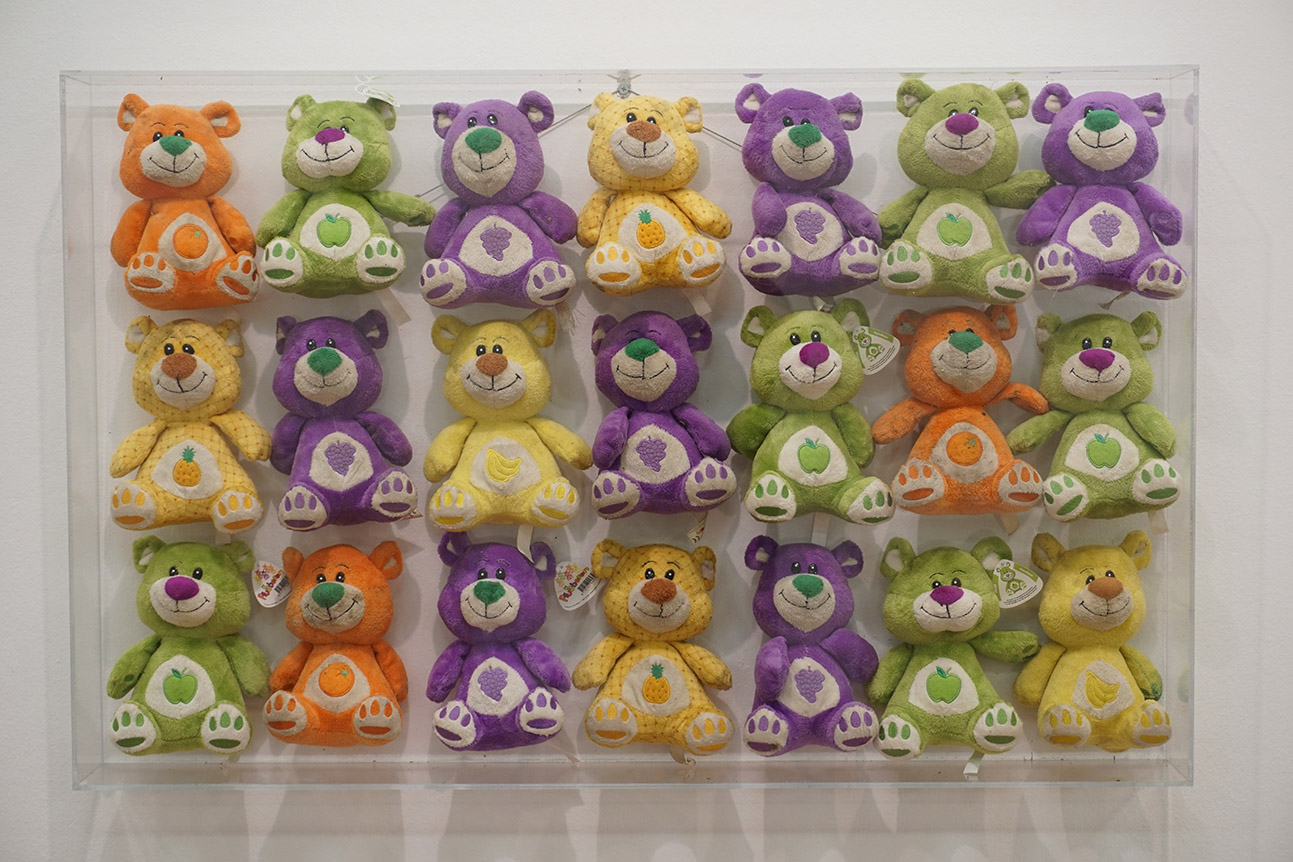
In June 2016, the police in a surprise commando operation removed the migrants from the camps at Idomeni. The action was so swift that people barely had time to gather their belongings, and many personal items were inadvertently left behind in the chaos. After the operation was completed, reporters and photographers were permitted to enter the now deserted camps. Yiorgos was shocked at the number of items, particularly toys, that the migrants were forced to abandon during the evacuation. He collected over 500 items and took them with him. From May to September 2017, Yiorgos exhibited 350 of those items encased in plexiglas boxes at the State Museum of Contemporary Art of Thessaloniki. The show was called Relics to eternity /Idomeni 2015-2016.


Between his photographic documentation and his exhibition of objects, Yiorgos has provided a moving and elegant record of this brief collision of peoples that occurred in the north of Greece. Of course, we must recognize that the economic disparity and social instability that fueled such an encounter are not unique to this individual situation. They impact on international relations throughout the world and, on the most intimate level, truly define how individuals within communities interact. I really appreciate Yiorgos' willingness to become involved in a situation he could easily have ignored and his eagerness to share with a larger audience his experiences of the crisis.


In closing, I don't want to leave you with the impression that Yiorgos and I went our separate ways once he returned to Greece after grad school. That simply isn't the case. My girlfriend and I visited him and his then pregnant wife in Thessaloniki in 1988, and he stayed with us and our young family years later at our home in Upstate New York. We've never been out of touch completely, though there have been some years when our link is more tenuous than others. Over the years, birth announcements, holiday greetings and exhibit notices have crossed the Atlantic at irregular intervals. The advent of social media has certainly made long distance communications more immediate and convenient, so we can now share regular glimpses into the mundane (and hopefully, on occasion, not so mundane) activities in which we're engaged. I'm optimistic that we will get together again in the future. Perhaps, when my wife stops working, she and I will visit Greece a second time, or Yiorgos' career will bring him back to America once again. It's not impossible. Though this entry has touched upon the topics of photography, my own and Yiorgos' personal histories and an international crisis, it essentially serves as a testament to the nature of friendship which endures regardless of the passage of time or miles of separation.


Yiorgos and Me in the Brooklyn College Men's Room
As always, I encourage my readers to comment here, but, if anyone prefers to respond privately, I can be contacted at gerardwickham@gmail.com.